From predicting behaviour to designing AI that deserves appropriate trust
My work connects computational modelling, behavioural theory and human-centred evaluation. The goal is not only to make AI systems more accurate, but to understand how they affect people and institutions—and to build alternatives that are transparent, useful and socially responsible.
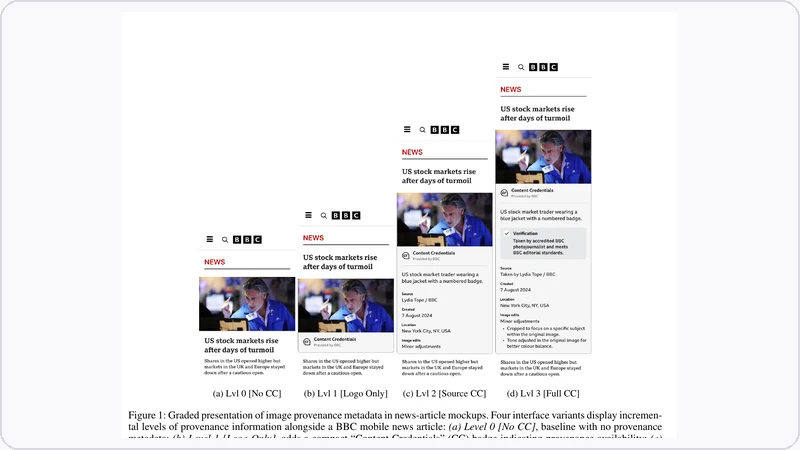
Media and health are the core domains of my research. I examine how recommendation, personalisation and generative AI shape news consumption, the use of health information and trust. Food choices, online recipes and nutrition form a longstanding strand of this work. This includes controlled experiments, prototype studies, field collaborations and long-term evaluation with academic, industry and public-sector partners.
Core research areas
Media and health, connected by AI
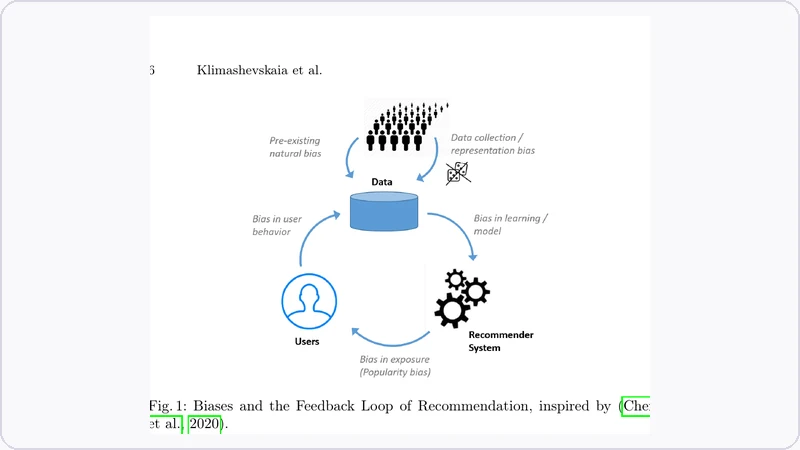
Two core domains and a shared foundation in recommender systems, united by the same question: how can AI influence behaviour without undermining human agency or societal values?
The highlights below keep the focus on the current programme. Across the broader portfolio, I have initiated, led or co-led 20+ national and European projects, including eight EU projects, and helped secure NOK 650m+ in competitive funding—approximately NOK 365m through PI roles.
Selected major grants
CuratedAI and VaccAI — Research Council of Norway, 2026
NutriCal65 — European Union Mission on Cancer, 2026–2030
Reynir — Agenda Vestland, 2024
NEWSREC — Research Council of Norway, 2021
SFI MediaFutures — Research Council of Norway, 2020–2028
RE-AIMED — Research Council of Norway, 2020
View complete grant history
2026: Research Council of Norway — CuratedAI: AI transparency, media literacy and appropriate media trust.
Part of a combined 17.1 MNOK mobility project award connected to SFI MediaFutures and the University of Bergen. PI.
2026: Research Council of Norway — VaccAI: Trustworthy health communication and vaccine beliefs in Norway and Ukraine.
Part of a combined 17.1 MNOK mobility project award connected to SFI MediaFutures and the University of Bergen. PI.
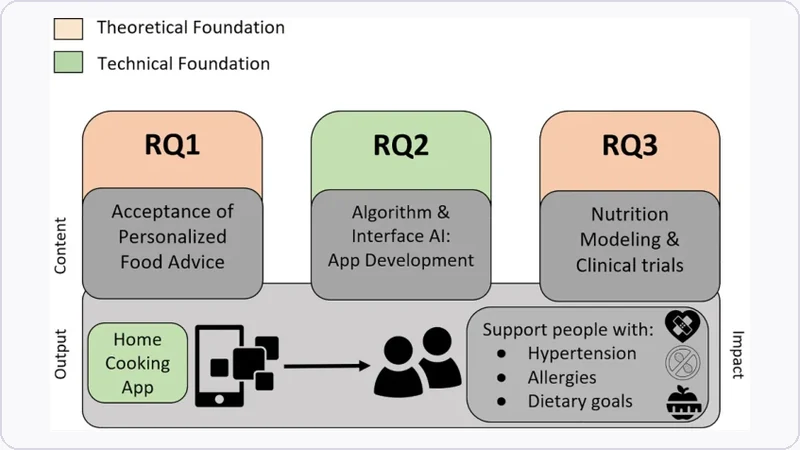
2026–2030: European Union Mission on Cancer — NutriCal65: AI-guided nutrition support for cancer patients.Co-Investigator.
2024: Agenda Vestland — Reynir: Combatting misinformation with joined forces.
Amount: 10,000,000 NOK, 2 years. Co-PI.
2021: Research Council of Norway — The Double-edged Sword of News Recommenders’ Impact on Democracy (NEWSREC).
Amount: 8,000,000 NOK, 4 years. Co-PI.
2020: Research Council of Norway — MediaFutures: Research Centre for Responsible Media Technology & Innovation.
Amount: approximately 26,000,000 EUR, 8 years. PI / Centre Director.
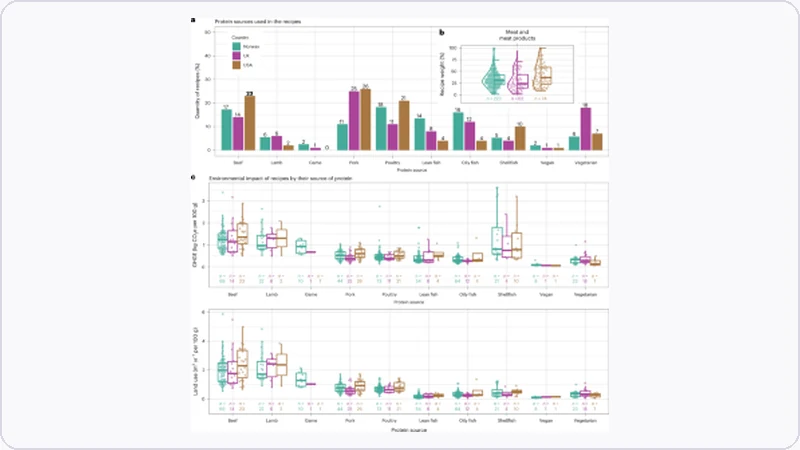
2020: Alpro Foundation — Communicating the environmental impact of plant-based recipes.
Amount: 49,000 EUR, 1 year. PI.
2020: Research Council of Norway — RE-AIMED: Readjusted responses by use of AI in medical calls.
Amount: 15,975,000 NOK, 4 years. PI.
2019: European Union — Interdisciplinary connectivity: Understanding and managing complex systems using connectivity science.
Amount: 4,030,279 EUR, 4 years. Co-Investigator.
2018: Research Council of Norway — ITS for sustainable TRANSport: In-vehicle FEEDback on eco-driving and external costs.
Amount: 6,700,000 NOK, 4 years. Co-Investigator.
2018: Research Council of Norway — Investigating the impact of Artificial Intelligence on Journalism’s Social Contract: Issues of Machine Ethics in Modern Journalism.
Amount: 297,000 NOK, 1 year. Co-Investigator.
2017: Austrian Research Promotion Agency — EcoMove: Knowledge-based platform for predicting mobility bottlenecks and promoting sustainable behavioural change.
Amount: 345,424 EUR, 2 years. Proposal Coordinator & Co-Investigator. I coordinated the proposal and developed the work package on predictive modelling and recommender systems.
2017: European Union — ReTV: Enhancing and Repurposing TV Content.
Amount: 3,100,000 EUR, 4 years. Co-Investigator. I helped shape the recommender systems and predictive modelling components of the proposal.
2015: European Union — AFEL: Analytics for Everyday Learning.
Amount: 2,581,940 EUR, 4 years. PI. I coordinated the project from the Know-Center side and developed work packages on visual analytics and social network analysis.
2014: Austrian Research Promotion Agency — K1 Research Center Grant.
Amount: 20,000,000 EUR, 8 years. Co-PI. I contributed significantly to the strategic research and financial plan for the Social Computing research area, including the involvement of industry partners.
2014: Austrian Research Promotion Agency — Six COMET-funded industry projects.
Amount: approximately 500,000 EUR, 1 year. PI. I co-acquired six industry projects in Social Computing with partners including major media and technology companies.
2014: European Union — Marie Curie ERCIM Alain Bensoussan Fellowship.
Amount: 50,000 EUR, 1 year. PI. The fellowship supported research on predictive modelling in big data at NTNU in Norway.
2013: Austrian Research Promotion Agency — Three COMET-funded industry projects.
Amount: approximately 250,000 EUR, 1 year. PI. I co-acquired three industry projects in Social Computing.
2012: Austrian Research Promotion Agency — Innovation Check Grant.
Amount: 5,000 EUR, 1 year. PI. The project explored social recommender systems on multi-dimensional data together with an Austrian start-up.
2012: Marshall Plan Foundation — Visiting Scholar Fellowship.
Amount: 7,500 USD, 5 months. PI. The fellowship supported research on efficient information access in social systems.
2011: Austrian Research Promotion Agency — Dissertation Fellowship.
Amount: 100,000 EUR, 2 years. PI. The project focused on tag-based information access in social systems.
Selected distinctions
Best Paper Honorable Mention — ACM DIS, 2023
ACM Senior Member — 2020
Best of Computing — ACM Computing Reviews, 2017
Best Paper Honorable Mention — The Web Conference, 2017
Multiple best-paper and poster awards — 2011–2014
View complete awards history
2023: Best Paper Award Honorable Mention
at ACM DIS 2023 for “Designing for Control in Nurse-AI Collaboration During Emergency Medical Calls.”
2020: ACM Senior Member,
awarded for technical leadership and sustained professional contributions.
2020: Momentum Stipend, University of Bergen.
UiB’s flagship development programme for early-career researchers pursuing an academic careers at a research university. Amount: 100,000 NOK.
2018: Austrian Chamber of Commerce Prize
for the proposal “A predictive Facebook advertising model for the Austrian food retail trade.”
2017: ACM Computing Reviews — Best of Computing
for “VizRec: Recommending Personalized Visualizations,” published in ACM Transactions on Interactive Intelligent Systems.
2017: Best Paper Award Honorable Mention
at The Web Conference, WWW 2017, for “Investigating the Healthiness of Internet-Sourced Recipes: Implications for Meal Planning and Recommender Systems.”
2014: Best Poster Award
at the ACM Conference on Hypertext and Social Media, HT 2014, for “TagRec: Towards A Standardized Tag Recommender Benchmarking Framework.”
2014: Among the Best Papers
at WWW Companion 2014 for “Long Time No See: The Probability of Reusing Tags as a Function of Frequency and Recency.”
2013: Among the Best Papers
at IEEE/ACM ASONAM 2013 for “Acquaintance or Partner? Predicting Partnership in Online and Location-based Social Networks.”
2013: Best Paper Award
at the International Conference on Social Eco-Informatics, SOTICS 2013, for “Predicting Social Interactions from Different Sources of Location-based Knowledge.”
2013: Best Poster Award
at the ACM Web Science Conference, WebSci 2013, for “Head Start: Improving Academic Literature Search with Overview Visualizations based on Readership Statistics.”
2012: Best Paper Award
at the International Conference on Knowledge Management and Knowledge Technologies, I-Know 2012, for “Exploring the Differences and Similarities of Hierarchical Decentralized Search and Human Navigation in Information-networks.”
2012: Douglas Engelbart Best Paper Nomination
at the ACM Conference on Hypertext and Social Media, HT 2012, for “Evaluating Tag-Based Information Access in Image Collections.”
2012: ACM Student Travel Award
to attend the ACM Conference on Hypertext and Social Media, HT 2012, Milwaukee, USA.
2011: Young Scholar Best Paper Award
at the International Conference on Information Technology Interfaces, ITI 2011, for “Improving the Navigability of Tagging Systems with Hierarchically Constructed Resource Lists: A Comparative Study.”
2010: Best Paper Nomination
at IEEE SocialCom 2010 for “On the Navigability of Social Tagging Systems.”
2010: SFG & OFG International Travel Award
from the Austrian Science Funds SFG and OFG.
Research-community leadership
Contributing to the institutions that evaluate and organise research
Selected examples complement the publication and funding record with evidence of trusted scientific service.
ACM RecSys · 2018–2020
Workshop and Late-Breaking Results Co-Chair
Helped shape programme content and emerging-work tracks at the leading conference dedicated to recommender systems.
ACM SIGIR · 2020–2021
Senior Programme Committee
Contributed senior-level assessment to a flagship international venue in information retrieval.
UMUAI · 2019
Special Issue Editor
Editorial responsibility for a specialist issue in one of the central journals for personalised and adaptive systems.
International service
52 conference committees
Programme and senior programme committee service across venues including The Web Conference, SIGIR and RecSys.
Interested in research collaboration?
I work with academic, industry and public-sector partners on responsible AI, behavioural evaluation and real-world experimentation.